Author: Liam Page 8 of 11

Update the nth


Funny, it’s never occurred to me to post more regularly, like my heroes John Scalzi, Cory Doctorow, Patrick Rothfuss, and Charles Stross, so that I can just do regular posts and not silly, bloated “update” posts. Funny; I should really start considering that. 😛

But anyway, here’s a bloated “update” post:

I just updated this site to remove the option of buying individual short stories (silly idea in the first place) to link to where they can be bought for soopercheep on Smashwords in one collection. As of this writing, only $1.49 for all five stories. However, starting tomorrow (Sunday, March 4), you can take advantage of the Smashwords Ebook Week promotion and get 25% off ($1.12 if my maths is right–and if not, that explains my English degrees….).

Enough hawking. What else is going on? Well, as this wonderful, funny, and very very accurate post, “25 Things I Want to Say to So-Called Aspiring Writers,” so ardently proclaims: a writer writes! I’ve been… not writing as much lately, so much as, doing stuff around the subject of writing. That is, I’ve been editing my novel, and looking for publishers and agents. I’ve got a feeler out for one agent in particular that I would really like to work with and I’m eagerly awaiting his reply. But, if he, like So. Very. Many. agents and editors out there, aren’t taking on any more submissions — I’m pulling the trigger on self-publishing this novel with the help of Kickstarter.

The novel’s been heavily edited, it’s been workshopped, it’s ready to see the light of day. And I’ve been setting up the framework to get it done: pricing marketing materials, proofing services, Lulu versus CreateSpace, and recording the audiobook to put out as a free trial of the book itself. (A tactic heavily recommended by such self-made successful authors like Scott Sigler and JC Hutchins. (At least, I’m pretty sure they advocate it. I mean, they did it when they got started. It could have been another writing hero of mine, Michael A. Stackpole, who is, while also a NY Times bestselling author, a huge self-publishing advocate. And while he furiously reminds authors to never forget the self-marketing, I’m not sure he’d advocate giving something like an audiobook away for completely free. *shrug*)

Anyway, so I’m getting that all ready to go.

I’m also working on an “Inception” role-playing game rules set. It uses Savage Worlds as its basic rules, but then it incorporates a Jenga tower (as inspired by Chad’s “Lucid” RPG). My version is a lot more crunchy than “Lucid,” and I’ll be play testing it next week. When I’m done, of course I’ll put it out for free, considering all the copyrights I’d probably break otherwise.

I’m also working on a new story that’s been flitting around my mind for a while. It’s a tough little thing to write, though. I know how it must start, I know how it must end, and I know some stops in between, but getting the points to connect has been a challenge.

And I’m working on the outline for my next novel: a YA fantasy inspired by my daughter’s imaginings once as we hiked a trail. I’m sure people will want a sequel to the novel I’ve already finished (my test readers sure do!) But this one needs to be written first.

And, finally, I’m working on a “shard,” or adventure for the Fading Suns RPG. It’s essentially writing on spec: one writes a shard, and submits it for potential approval. If they like it, they may send something more my way. I so very much want to write for them, for this world! I fell in love with the Fading Suns setting and story when I discovered the “Emperor of the Fading Suns” computer game, circa 1996, and discovered it came from an RPG. Ever since, I’ve been semi-obsessed! I really want the shard to be my top priority; I desperately want to write for this system. Especially as their new edition comes out later this year! But, alas, I’ve all of the above to try to get put away.

And that’s my writing life right now. Hopefully I can start posting the cool and interesting things that come my way near daily. So, Until next time….


Share

Related Posts:

It is finished! …again!

This is going to be a brief post because it’s late, I’m tired, but I must tell the world! You know that novel I finished back in the post “It is finished!“? Well, I ran it through the “Critters” online writing workshop I belong to and a couple of trusted readers, and I’ve just tonight finished the final-final draft! (Well, I figure if an agent decides to take it on, they’ll likely have me complete yet another draft — but I’ll cross that stream when I have to bust it.)

In the meantime, I’m taking the leap and starting e-publishing it. (Hey, self publishing didn’t hurt Amanda Hocking’s or DAEMON’s Daniel Suarez’s. Though, no clue yet if my novel is good enough, but I think it’s not bad at all! *grin*)

Maybe tomorrow I’ll put up an excerpt and all… but right now: sleep! Aaahhh!

Share

Related Posts:

No no, NaNoWriMo.

Once again, I’m going to give up on completing NaNoWriMo. I intended to use this weekend writing and editing. Well, I’d gotten quite a lot done editing my existing novel! …and absolutely no new writing done.

Well, it’s for the best, really. I’d rather be that much closer getting my existing novel into a shape in which other people might think it’s good, and not just me. 🙂 If I can get a little bit more done every night this week, or at least another marathon editing weekend, I think I can get it finished before next week and be able to give it to some readers for critique. It’ll be nice to get some feedback from people outside my own head. The voices in there aren’t always the most trust-worthy.

I love this book, and I’m extremely proud of it — but I don’t mind saying I can’t wait to be done of it. Sure, I want it to be the best it can be! I’m not at all going to hedge on the effort going into editing it. But, when it’s done, when I’ve edited the last page and am ready to send it to paying customers/editors, I’m done with it. I totally understand how directors and actors when their franchise gets cancelled and they’re asked about fan efforts to revive their show, they often reply with a kind of “Oh, it was a great time in my life, but it’s over and I’ve moved on now. I don’t think I can return to that.” Makes me wonder what the heck’s George Lucas’ deal, constantly going back and fiddling with Star Wars. Guess it helps he just has to tell an army of people, “Go and change and add this. Hop to!”

Share

Related Posts:

Talkin’ Turkey

OK, that’s surely the worst blog post title ever. I am ashamed.

Now that that’s behind us, I just came across the wonderful page on SFWA’s site (I don’t know how I’ve missed it! I love SFWA!) called Turkey City Lexicon – A Primer for SF Workshops. It’s great advice for aspiring authors of speculative fiction (applicable to any fiction, really) on what not to do — or at least try not to do. Not all of the items are Do Not Do’s, but are just descriptions of tropes that are so common (or notorious) that they have their own labels and names.

Most of this stuff I’d heard before elsewhere, but even so, I still find myself reading through the list and saying to myself, “Oops, guilty of that one . . . eep! I’ve done that. . . .”

Here’s a few samples of turkeys:

  • Idiot Plot

A plot which functions only because all the characters involved are idiots. They behave in a way that suits the author’s convenience, rather than through any rational motivation of their own. (Attr. James Blish)

  • Kudzu plot

Plot which weaves and curls and writhes in weedy organic profusion, smothering everything in its path.

  • Plot Coupons

The basic building blocks of the quest-type fantasy plot. The “hero” collects sufficient plot coupons (magic sword, magic book, magic cat) to send off to the author for the ending. Note that “the author” can be substituted for “the Gods” in such a work: “The Gods decreed he would pursue this quest.” Right, mate. The author decreed he would pursue this quest until sufficient pages were filled to procure an advance. (Nick Lowe)

  • Second-order Idiot Plot

A plot involving an entire invented SF society which functions only because every single person in it is necessarily an idiot. (Attr. Damon Knight)

Share

Related Posts:

  • (related posts tool must not be working on this one)

William Gibson, The Art of Fiction

Paris Review has a great interview with what is, in my opinion, one of the great postmodern authors (regardless of if you classify him as a “genre writer” or a literary author). William Gibson has always had this incredible ability to really get at and critique the culture without making it obvious. Under the guise of gritty scifi called “cyberpunk,” was at the core a brilliant indictment of global market capitalism and the schizophrenic cultural logic that emanated from it. His later works, Pattern Recognition especially, is a deconstruction of the current culture we’re in the middle of and are too close to see the overall pattern to make sense of it.

See the documentary interview film, No Maps for These Territories. It’ll really make you think, and see things in a new way.

Here’s the beginning of the Paris Review interview

INTERVIEWER

What’s wrong with cyberpunk?

GIBSON

A snappy label and a manifesto would have been two of the very last things on my own career want list. That label enabled mainstream science fiction to safely assimilate our dissident influence, such as it was. Cyberpunk could then be embraced and given prizes and patted on the head, and genre science fiction could continue unchanged.

INTERVIEWER

What was that dissident influence? What were you trying to do?

GIBSON

I didn’t have a manifesto. I had some discontent. It seemed to me that midcentury mainstream American science fiction had often been triumphalist and militaristic, a sort of folk propaganda for American exceptionalism. I was tired of America-as-the-future, the world as a white monoculture, the protagonist as a good guy from the middle class or above. I wanted there to be more elbow room. I wanted to make room for antiheroes.

I also wanted science fiction to be more naturalistic. There had been a poverty of description in much of it. The technology depicted was so slick and clean that it was practically invisible. What would any given SF favorite look like if we could crank up the resolution? As it was then, much of it was like video games before the invention of fractal dirt. I wanted to see dirt in the corners.


Share

Related Posts:

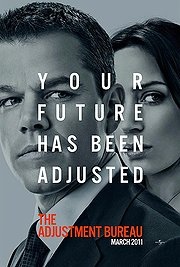
Adjusted earnings


20111028-114507.jpg


I’m of two minds on this article: On the one hand, copyright law is completely effed (thank you, Disney!) and should be scrapped and rewritten for the 21st century. Artists should be free to use others’ works to create new art, providing a. credit and attribution is given appropriately, and b. the original work is kept available for anyone to view/read/buy etc.


On the other hand, as it is, the Philip K. Dick estate has been very lenient in allowing others to play with his stories — very lenient (I’m looking at you, “Next” and “Paycheck.”) The estate is simply wanting to get what was previously agreed and promised to them, and they’re certainly in the right for that! In this case, the studio is simply looking for a loophole to avoid their obligations (as is their usual M.O.).


As a freakin huge fan of PKD, even with business ethics that put the estate in the right, aside, I want the estate to win. But I must still admit — I think the film was much better than the story, which suffers from PKD’s too-often emotionally sterile style.


Share

Related Posts:

General update

This is just a general update as it’s been a while since I posted. Did I mention on here I’m  a struggling writer?Yeah, no Internet at the house right now — I’m doing everything on an iPhone on 3G with occasional jaunts to the public library for their WiFi. I attended a social media conference for my day job yesterday. They said not to ask your social media subscribers for money very often else you’ll turn them away. I get that. I’m annoyed when some organization constantly hits me up for cash. So… lemme just post in just thisparagraph and no following paragraphs of this post *grin*: you can buy my very inexpensive collection of five short stories through Smashwords for a discounted $1.99. Please consider it. 🙂

So, what else am I doing with my time?

Well, I’m halfway through editing that novel I finished. It never fails to amaze me just how badly and constantly I need to edit what I write. This novel, for example: I’d submitted the first two chapters to a writing workshop once, and naturally I edited the chapters before submitting it. And, I edited them after getting feedback. Then, I edited them yet again (along with the rest of the first 2/3 of the novel) before submitting them for my Master’s thesis. Even so, going back over them for this completed draft edit, there’s still many places where I stopped in shock at just how bad a sentence was, or a piece of action. I wonder to myself, did I write this?! 

I should be glad that I’m growing as a writer to be able to improve my writing with every passing look. I just wish the writer I was immediately before each improvement wasn’t such a bad writer!

Anyway, I’m hoping to get most, if not all, of the rest of the novel edited. Then, off it’ll go to some test readers for their comments. Following that, another edit, and then self-publish as I look for an agent. Fortunately, agents (and editors and publishers) aren’t leery as they once were to buy novels that’ve been self-published. In many ways, it can serve as a proving-ground for the the novel’s potential.

But first, wrap it up here at the library and take a 20 minute nap — it was an early morning!

Share

Related Posts:

Magic’s nostalgia

I’ve been experiencing a very specific form of nostalgia lately. Coming to mind a lot has been a very particular time of my life, primarily centered around the books I was reading then, and evoking a mood or feeling in me that may be a mix of the feelings I felt then — but most certainly just a nostalgia for that time.

It was about 1998, spring. A crazy and mixed up, but at the same time, incredibly wonderful and hopeful time. My wife and I were living in Des Moines, before we found out she was pregnant. I was working, first, as a shift supervisor at a Waldenbooks, then briefly at a Sam Goody, then as tech support for an ISP. The Waldenbooks gig sucked. I’d been the assistant manager of another Waldenbooks before we transferred to Iowa for my wife’s promotion with her job, and it was a good job! But the Des Moines store was a huge disappointment. The Sam Goody was just a very brief stint while something better was found, which was the ISP support job.

We only had the one car, and wife needed to use it more than I, so I would either walk home from the mall of Waldenbooks, or take the bus to/from the city for the ISP job. And it was during that time that I started reading Mercedes Lackey. Specifically, her “Last Herald Mage” trilogy. I read it walking home, I read it on the bus, I read it between support calls. It was captivating, gripping, tragic, and magical.

Of course, I loved them, but they’re not the best books I’ve ever read. Also, I was still a voracious novel reader then so I’m sure I ate through those three and the “mage wars” books I read next within a week, two at the most — so it MUST have only been during one of those jobs. But, I remember reading them while walking, and I remember reading them while eating at this great little Chinese restaurant in the same building as the ISP job. *shrug* Memory is a funny thing.

Anyway, the nostalgia is partly for the experience of reading those evocative books: they’re the first novels I’d read that featured a gay hero, and that was fascinating. And they’re one of the rare fantasy books/series that I’d read that had such a dramatic and personal story. But also, it was a heady, new, and exciting time of my life that has become linked to those books — or, rather, to the reading of those books, most likely. And for various reasons, that’s been coming to mind quite a bit.

Is there a book or series that you’ve read that is indelibly linked to a particular time of your life?

Share

Related Posts:

It is finished!

More later when I’m more awake, but I just wanted to announce that I just finished the 1st draft of my first novel, tentatively titled Singularity Deferred. It’s 105,600 words long (about 25,000 longer than I anticipated), and 388 MLA-formatted pages.

I’m happy, pleased, proud… and exhausted! I’ll figure out what kind of ritual celebratory act I want to perform tomorrow; right now, I want to celebrate by sleeping. 🙂

Share

Related Posts:

Review: Freedom(tm)

(Post originally published on my other blog, GrogMonkey, back on Jan. 27, 2011. Still trying to figure out how to divide the work between the two blogs.)

Freedom(tm) is the sequel to Daniel Suarez’s brilliant Daemon. It’s going to be impossible for me to review Freedom(tm) without spoilering Daemon to some degree. Daemon told the story of a genius online game designer who over years set up a hidden system within the Internet to awaken upon news of his death. That’s where Daemon begins, upon the activation of this servant process, or, computer daemon. In Freedom(tm), the daemon has won the first stage of its plan, it has started a revolution.

The novel takes place in today’s world, and in today’s reality. Everything that happens, every technology that’s used, is either currently in use and available as consumer electronics, or is military. Some examples include sonic placement which allows for a voice to sound as though it is coming from a specific point in space, even one’s own head (this is currently being used by advertisers), suits that bend light around it so as to render the wearer near-invisible (military development), aerial drones that can be tagged with a target’s cell phone GPS and send deadly darts to rain upon them from 10,000 feet (guess who uses that), power systems that can pull fuel-use hydrogen from the rock while creating water as a byproduct (in use currently where the oil industry doesn’t kill it), vehicles that can be equipped with sensor arrays which allow it to drive by itself following road lines and signs, FMRI machines that can virtually read minds if the subject can be asked a series of questions like a polygraph, etc.

Although, the one negative about the book, as that a lot of this technology gets used by the revolutionaries in quantities that strain believability. Even in the system of commerce and trade that is set up for the revolution to use, it’s difficult for me to believe that they can be equipped in such a short amount of time with mass quantities of wireless “augmented reality” glasses, power station-building equipment, invisibility suits, etc. But, fortunately, it’s written in such a way to to be forgiven.

Yet, that problem weighs heavy, I think, because of just how otherwise believable the story and situation is. Suarez writes a story that in all other aspects demands to be believed, so when a very crucial element of the revolution is questionable, it makes the verisimilitude of the entire story weaker.

Revolution. Let’s get back to that. That’s what Freedom(tm) is about — the true revolution for the modern age, the only kind of revolution that can happen in the western, developed world that could lead to fundamental change in economics, politics, society in general. Freedom(tm) illustrates a revolution that would have to take place in order to change the entire economic system from modern capitalism where boom-and-bust cycles are inherent, where unemployment is a necessity to keep the process working, where exploitation is not just a cost of doing business but a vital component — and brings about a system of true democracy controlled by the people and not by politicians who do the will of their richest contributors (corporations). Freedom(tm) does what SF author Kim Stanley Robinson advises we all must work towards: a post-capitalism society. Every stage of socio-economic-politics in history was thought to be the best one at the time, and at each new stage we looked back on the previous and questioned how we ever thought that last one was the best we could do. We need to get to that next stage. Freedom(tm) creates a believable means of doing so.

But it’s not an easy revolution. In Daemon, the daemon and some of its top human servants, are seen as evil. Killing people, infiltrating networks, implanting network worms, setting up processes by which corporations are held hostage and economic disaster looms…. The daemon is undeniably the villain of that novel. But Freedom(tm) shows us the reason behind it. And we come to realize that revolution is messy, and bloody. The point of revolution is to rip power from the hands of those who are in control, and obviously, those in control aren’t going to go down without a fight. Take what may be arguably a “worthy revolution,” the U.S. revolution. By most people, it’s seen as a just and necessary revolution — but think of how many people were killed fighting it. How many innocents, caught in the middle, suffered. How much was lost so that power could be ripped from one elitist class to a new, American class of elitists. The French Revolution was the epitome, the culmination, of the destruction of feudalism and control by royalty and the rise of democracy and private ownership — and it was horrifically bloody beyond belief. The “good guys” in that revolution were responsible for mind-numbing amounts of death.

Freedom(tm) doesn’t shy away from the necessity of “evil” things in order to bring down the multi-national corporation empire and establish true democracy and freedom. And, most importantly, create modern freedom where technology and modernization is not sacrificed, and is available to all, without the sociopathic economics of corporate oligarchy.

I doubt Suarez would call himself a leftist, I don’t know. He never uses terms in his novels like socialism, or communism, or anything like that. And that’s too his credit! Those words have a lot of baggage (most of which erroneously applied and misunderstood), that I’m sure if he used them or their ilk, he’d turn off readers out of hand. But the society, the economy, that he illustrates in Freedom(tm) is absolutely one of state-less communism, or anarcho-socialism. The government is undermined and rendered unnecessary, the corporations are rendered unnecessary and a violent hindrance to freedom and democracy. The society that is envisioned is absolutely the one that Marx said would follow capitalism, the one that could only be brought about thanks to the self-destructive mechanations and benefits of capitalism.

Like Cory Doctorow did with “wuffie” in his Down and Out in the Magic Kingdom, Suarez imagines an economy based on individual reputation and the acts one commits, good or bad, against other people and society. It’s a system that can only work in extremely small societies where everyone knows each other, or with modern/postmodern, technology dependent upon the interconnectedness we all scrape the surface of in our use of the Internet. The plus side is we have the means now to realize a post-capitalism society! The downside, is it’s dependant upon technology. And that only works so long as energy supplies are good. Suarez deals with that by describing system of creating and distributing energy power that is sustainable and not reliant on non-renewable fossil fuels.

You’ll notice I jumped in talking about the grander themes and ideas of Freedom(tm) and haven’t really talked about the plot or characters. Sadly, those are the weakest parts of the novel — but that’s not to sat they’re bad. Where Daemon was all about plot and character, Freedom(tm) often feels like it uses characters (many from the previous novel) simply as a means to portray the ideas Suarez wants to get across. The characters, some of whom were so vivid in Daemon, come off here as two-dimensional. Especially the only significant female character, Agent Natalie Philips. In Freedom(tm), she’s acted upon and used as a tool to advance exposition. In fact, in the climax of the novel, she’s on the brink of actually doing something, discovers some vital information, is ready to jump into action, and suddenly everything she did up to that point is rendered pointless by the actions of other characters and she’s even saved by her lover in a way that makes her entire character arc of rising action meaningless. I get the feeling that Suarez was intending more for her — he placed her in a very important, vital location in the story, gave her access to important information and means to get more and do more, but then in a swoop makes it all a complete anti-climactic waste. I was very disappointed about that. Perhaps as he wrote the novel and found ways around her character to advance the plot and reach the grand climax, he forgot to bother with going back and writing her out of the novel, because she ultimately has no point in even being in the novel at all.

The plot that involves the way the government, basically in control by the multi0national corporations, fights back against the growing revolution, authentic and scary. Using increasing fear-tactics governments have always used to try to keep people in line and too powerless to act and too distracted to even speak out (economic crashes, high unemployment, outlandish fuel prices, and a patriotic surge of anger toward illegal immigrants), they find ways to use corporate, private military forces (fictional analogs of the real Blackwater/Xe Services, KBR, DynCorp, Aegis Defense, Raytheon, International Intelligence Limited, Executive Outcomes… these sound like fictional organizations, don’t they?) to do in the U.S. what they do in reality all over the world — divert public outrage toward those the powerful want undermined, and keep revolutionary elements (and the people in general) under check, with force if necessary.

Freedom(tm) is in many ways a terrifying novel because of how realistic it is (e.g.: the way in which corporations currently control government, and private corporate military operates around the world, and how the government could believably act against its own people in the attempt to maintain its own power); but it’s also one of the most inspiring, hopeful books I’ve read. So many people ask me what this fantastical anarcho-syndaclist, government-less communism, could possibly look like, and I too often have to use far-future SF like Blue Mars to offer examples — now, there’s Freedom(tm) which sets it in the here and now. Sure, it has some flaws, but there’s no such place as utopia. Oligarchic capitalism has serious problems, but so many people think it’s the best we can do — it’s certainly better than slavery and feudalism. I say we deserve to fight for a post-capitalist system that is even better than capitalism, even if it’s not perfect. Better is better, utopia or not.

Oh, critical theory aside — it’s really a fun and exciting book. Don’t let my socio-political ramblings dissuade you from readingDaemon and Freedom(tm); it’s my job to give voice to the overt socio-politics that’s only hinted at and implied and told through narrative in novels.


Share

Related Posts:

Page 8 of 11

Powered by WordPress & Theme by Anders Norén