Category: Personal Page 5 of 6

Clickity-clack!

(Post originally published on my other blog, GrogMonkey, back on Jan. 27, 2011. Still trying to figure out how to divide the work between the two blogs. I only have a couple more to cross-post in a batch after this one.)

One of my English Masters program classmates posted on Facebook that he recently bought an electric typewriter, and posted pictures. My initial knee-jerk reaction was, “Heh, cool.”Then my first reasoned mental response was, “Wait, what the heck is a typewriter for? Why in the world have a typewriter? Would he actually use it? Do they still make ribbon??”

But in the back of my mind that “Heh, cool” was still echoing around. There’s just something romantic, to a writer, about a typewriter — the tactile sensation of physical objects (keys, be they on swinging arms, daisy-wheels, or IBM character balls), changing the physical world (ink on paper with the barest impression of the letter pressed into the surface of the paper). Much in the same way guns are romantic and carry a mystique, being able to physically affect the world from a distance with an object commanded by your hand. (OK, does the gun metaphor make sense to only me?) Anyway, to someone who all but worships at the alter of the written word, having a machine that manipulates reality to force words into the material world is powerful, heady, and visceral.

Needless to say, I really like this typewriter idea.

It’s not the same with a computer. Sure, you press buttons and words appear on a screen, and that’s powerful in its own way. And knowing that those words, heck, these words, can instantly be seen by someone mrs away or even by millions of people (heh, ok, not these words by millions, but you get my point), is awesome and sublimely powerful! But in a very abstract way. A higher-order way that requires a certain amount of sophisticated thought to really appreciate the power of kinetic force translated into 1s and 0s and retranslated into understandable language by a remote viewer. The typewriter affects a more immediate, primal connection in the mid-brain, in the right-brain, and in the “gut.”

OK, enough babbling — typewriters to a writer is just freakin’ cool!

Naturally, I’ve started looking for one. 🙂 eBay, of course, has many for very cheap prices! Craig’s List has a few listed, for a little more ($50 to $100), but has the benefit of locality so I can see and try before I buy. I’ve looked, and people still make ribbon for a great many machines, and cheaply priced, too!

The problem is, of course, besides the unnecessary cost when I could spend that money on a week’s groceries, is space — we have no space in the house for unnecessary luxuries like that. And it is an unnecessary luxury, sadly. After all, after I typed a story on it, I’d still scan it in to an OCR program so I could edit it on the PC; no way I’m retyping something line that. I hate retyping stuff! With a passion. But, that experience of putting thought and imagination, fresh from the brain and never before exposed to the light of day, tattooed into the surface of the page, is a cathartic, almost shamanistic experience! Well worth the time to scan the result, page by page, into a doc file.

I didn’t always have this feeling about typewriters, back when I had no choice but to use them, in high school. Ugh! Writing on them was miserable! I always wrote everything, both fiction and school papers, longhand (something my pasty and soft hands actually can’t do for more than a minute any more). I’d erase and edit and erase and edit, and then have my proficient mother type the school papers for me. The fiction tended to stay in many lost notebooks.

I had a HS typing class, which I was miserable at. Miserable both in skill and mood. Much to my current chagrin! Twenty years later of obsessive computer use both for business and pleasure, I can type more than 60 w.p.m., and with little error, but in such a way that would make a touch-typist roll with laughter.

Perhaps the years of being disconnected from the physicality of creating words has turned my hate for the machine into a nostalgic adoration. Truly, Baudrillard-ian nostalgia for a thing that never existed. But, I feel it none the less. And I do hope I can find the space and money to get my own typewriter so I can feel that connection and embody that stereotype of the classic 20th century portrait of the earnest writer. But I think I owe my wife a scrapbooking table first….


Share

Related Posts:

I gots books!

(Post originally published on my other blog, GrogMonkey, back on Jan. 8, 2011. Still trying to figure out how to divide the work between the two blogs.)

Hooray for books! Hooray for holiday gift cards!

Thanks to family members’ generosity with Barnes & Noble gift cards, I recently acquired a stack of books I’ve been pining for for months, and in some cases, years. Every once in a while I’d visit them on my Amazon Wish List and coo, “one day, my pretties, one day.” Now, I gots ’em! And, thanks to my continued adherence to my New Year’s Resolution (which, in part, includes mandatory reading of a new short story or novel chapter daily), it looks good that I’ll be able to actually read them.

Without further ado, I present, the new residents in my library which I shall soon get to know better:

Altered Carbon by Richard K. Morgan
I’ve heard of this book for some time, and has the endorsement of my brother. (But then, he also like The Wheel of Time series, so, pfft! *wink*) Published in 2002, it catches the post-cyberpunk wave and is considered a groundbreaker in the current wave of post-/transhuman fiction. All qualities which appeal both to my entertainment and my scholarly research interests.

Freedom(tm) by Daniel Suarez
The sequel to Suarez’s outstanding page-turner, Daemon. That’s the story of a computer genius and online game mogul who programmed a massive network of computer systems and programs to start the process of taking over the world the moment his obituary is detected. The scary-cool thing is that nearly 100% of all the tech and processes that are used in the book, are real and available to the consumer.

The Wee Free Men: The Beginning by Terry Pratchett
Big fan of Sir Terry Pratchett (what SF/fantasy fan isn’t!?) But I’ve only read a few of his books. He has so many, and so many refer to each other and are part of mini-series within series, that I generally have no idea where to really dive in. Well, is latest book, I Shall Wear Midnight came out not long ago, and it’s gotten huge raves on many of the SF podcasts I listen to and blogs I read. It’s the fourth and I believe final book of the “Tiffany Aching series” of his. It’s a part of his Discworld . . . world, but it’s a stand-alone series, described as a funnier (and occasionally, better) Harry Potter with a female protagonist. Intended as a “young adult” series (just like Harry Potter), but adults are loving them.

Anyway, The Wee Free Men: The Beginning is the first two books in the series. Interestingly, the Amazon reviews for those first two books, Wee Free Men and A Hat Full of Sky, both rank 4.5 out of 5 stars, but this compilation only has 2.5 stars. When you read the reviews, you find it’s entirely because people bought the book thinking it was a new book in the series. Idiots. Sorry, but c’mon. It’s your dumbarse mistake you bought the book thinking it was something it wasn’t not even bothering to, I dunno, read the description of it where it says “Contains the complete text of Wee Free Men and A Hat Full of Sky,” and you give the book a bad review for that? As if it’s the book’s fault? Idiots.

The Name of the Wind by Patrick Rothfuss
This one has universal praise from those SF podcasts and blogs as a great epic fantasy. I also heard about this one about a year ago and stuck it on my Wishlist, this at the end of the year the bloggers and podcasters started up singing its praises again.

The Windup Girl by Paolo Bacigalupi
And finally, this near-future dystopian, and extremely realistic, vision of a world where peak oil has been passed and calories are used like money. Also heard of this one nearly two years ago, recommended by Cory Doctorow. Since then it’s won both the Hugo and the Nebula, and now finally I can read it!


Share

Related Posts:

Rothfuss coolness


The last couple of days has hit me with a couple of instances of coolness regarding a writer I like… whom I’ve not actually read yet! Patrick Rothfuss, author of the fantasy bestseller, The Name of the Wind, and its sequel, The Wise Man’s Fear. These are his only two published novels so far, and I’ve not actually read either yet — although, The Name of the Wind happens to be sitting atop my stack of books-to-read. (Link to my other blog I’m still migrating posts over from.)

If I haven’t read any of his fiction, how can I like him? Well, for nearly two years now, I’ve been reading about him, and especially lately, have been hearing him on a lot of podcasts and reading his interviews. I like the guy. I’m looking forward to liking his writing, as well, soon.

Anyway, one of those podcasts, I listened to this last week: Adventures in SciFi Publishing, number 118. As the interview guest, he spoke a lot about various topics, about writing and getting published, and his trials and tribulations with editing — very inspiring. But one thing he said that really got my attention, was his revelation that he didn’t know a simile from a metaphor, and has to think about the difference between an adjective and an adverb. This was shocking to me because, well, personally, I love grammar. 🙂 But apart from that, it seems to me that every writer I’m familiar with appears to know more about grammar than I do. How is it this acclaimed, best-selling, beloved writer by intelligent and educated fantasy readers, could possibly not know 5th-grade grammar concepts? Me knee-jerk reaction was of shock and disappointment.

But, after a moment, I realized: Who flippin’ cares if he doesn’t know the mechanics. He can obviously write extremely well from instinct, from natural talent, from the experience of reading other peoples’ writing, from (as he described) listening to his own words and how they feel, if they simply sound well put together. In a way, I envy that.

Though, he also teaches creative writing. And I have to wonder, surely he has to know basic “stuff” in order to at least help teach basic skills and what to avoid. I mean, how can you teach new writers to avoid adverbs, especially “-ly” adverbs, if you have a hard time remembering what an adverb is? For example. And I wonder, was he being intentionality overly self-deprecating in the interview? Oh well, not really important.

The second piece of interesting coolness was his latest blog posting describing his experience trying to book a last-minute book signing in Iowa City. It’s an amusing tale just in general. But what amused me more, was that the store that finally booked him, and quite happily, was The Haunted Bookshop — a primarily used book store. I lived in Iowa City for a year, about a decade ago, and I used to shop at that store all the time. I remember going in there right before each of my twice-a-month 8-hour drives to Missouri to pick up a new audiobook.

Really, it’s kind of silly, but the fact that he talked about this store, and posted a very familiar picture of the place, made me smile and chuckle for a couple of days. Ah, nostalgia-from-serendipity!

Share

Related Posts:

Farm-grown Spam

SF novelist Jim Macdonald has an article, “Fence Your Stolen Content at Amazon.com“. He discusses the threat of e-books as becoming the new breeding-ground fir spammers and search engine scammers:

“With the cost of self-publishing approaching zero thanks to e-publishing, and with content-farms being depreciated by Google, it seems that spammers have taken to e-publishing.”

As someone seeking to start a career with e-publishing as a significant cornerstone in the foundation, this bothers me a lot. As a user of the Internet since around 1995, I’ve seen the war against spam and pernicious Web advertisers get messy. As someone who has worked in IT in some way since 1998, I’ve been on frontlines fighting spam and blocking advertising. And, as a Web designer, I’ve had to fight hard to get sites as high as legitimately possible on search results while competing with unscrupulous content farms.

As someone who has spent his entire adult life, both personally and professionally, fighting with spammers and scammers, the prospect of having to continue the fight as a writer, wearies me greatly.

On the glass-half-full side, I have seen a great deal of improvement in the last 15 years in the war over e-mail spam. There was a time, before client spam filters and ubiquitous e-mail server filters, when I considered giving up e-mail altogether as the ratio of spam to ham in my inbox was 75/25. Now, the amount of spam I get barely annoys me.

The current hated weapon is the content farm. Do a search on Google for nearly anything and many of the hits you’ll get back will be to About.com or Suite101 or similar pages that have simply copy-and-pasted a page of generic info about your desired topic, and then filled it with product links and ads. Sadly, the war against these isn’t going too well.

And that’s the threat Macdonald sees in e-publishing — do a book search on Amazon.com for a particular topic, and find several cheap e-books… that have the same generic, boilerplate content as seen in similar pointless works across the ‘net. The legitimate author becomes a squeak in a sea of static.

Things change, and e-mail spam is a surprising example of things changing for the better. I have hope. Sadly, I don’t think it’ll improve until it gets much worse — and I have the impeccable timing to jump right into the fray.

Share

Related Posts:

Stories for sale!

for saleNow, for your e-book reading enjoyment, I’ve put some of my stories (both previously published and new) up for sale on this site!

Maybe it’s an experiment to see if it goes anywhere, maybe I’ll be able to pay rent. Maybe my hopes and spirit will be dashed upon the barren rocks of disinterest. We’ll see.

But if you’re someone who like to support artists directly (especially poor, struggling artists) instead of corporate stock holders for media conglomerates, consider buying a couple stories — or the low low priced five-story collection! They work great on iPhone/iPad’s iBook reader, Kindle, Nook, and other readers.

So, check the story page out and take a look at samples of the tales, won’t you? Your patronage will be appreciated!

Share

Related Posts:

Be it resolved…

So I was reading back in my oh so many blog posts this year</sarcasm>, and recalled this one: io9 suggested reading list. My best laid plans of reading this year. And I realized, this year was a really, really bad year. Aside from finally jumping through the right hoops to get my English Masters Degree, this year was full of fail.

I have new best laid plans, now, though. For a full accounting, check out my general blog’s entry, CelticBear: Be it resolved…. In it I discuss the drek that was 2010, and what I plan to do about it in regards to writing and readjusting my life in the right direction.

Then, if all goes well, I should have some more blog posts over here more often.

Happy New Year.

Share

Related Posts:

io9 suggested reading list.

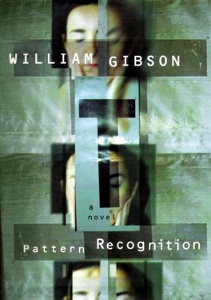
pattern_recognitionio9.com recently (well, OK, a month several months ago — I’m a little lot late) published their 20 Best Science Fiction Books Of The Decade” list. This really is a compelling list of SF over the last ten years, much of it dealing with issues of late postmodern culture and our sense of rootlessness and lack of historical perspective (The Baroque Cycle, by Neal Stephenson; Pattern Recognition, by William Gibson; Time Traveler’s Wife, by Audrey Niffenegger are primary examples, although nearly all of them have living in postmodern times as an underlying theme). Some of it dealing with posthumanism and the way technology is not just “helping” humanity, but changing it at very fundamental levels–or exploring changing perceptions of what it means to have gender or racial, or even species identification (Rainbows End, by Vernor Vinge; Perdido Street Station, by China Miéville; Down And Out In the Magic Kingdom, by Cory Doctorow).

The following is their list and my status, as of this moment, on that book — whether I’ve read it, have it and plan to read it, don’t plan on reading it, etc. I’d like to read most on this list by the end of the year (eep! half over already!). Updates may come… now and then.

Share

Related Posts:

Brust on Capital

First, a little story:

I’ve been a huge fan of SF author Steven Brust since circa 1988 when Taltos came out. (I didn’t know at the time that was not the first in the “Vlad Taltos” series, but it worked out OK.) After becoming a fan, I discovered Brust was a self-described Trotskyist. Being in my teens, early to mid-20s, I really didn’t have any idea what that was but I knew it was somehow connected to GASP! evil Communism! One part of my brain processed this information something like, “Huh, his writing is kick-ass, he seems really cool…perhaps whatever Trotskyism is it’s either a) inconsequential to who he is, or b) it’s not some all-encompassing evilness as my culture leads me to believe.” The other half of my mind processed more like, “LA LA LA LA I’M NOT LISTENING! I SEE NOTHINK! I HEAR NOTHINK! MOVE ALONG, CITIZEN!”

So the cognitive dissonance was dealt with by ardently ignoring it.

Until around 2007 when I started grad school and my first instructor was Dr. William Burling: the most influential professor, and one of the most influential persons, I’d ever met. I had the privilege of being a student of his for three (almost four) fantastic classes. What his greatest influence on me was to introduce me to the idea of questioning culture, society, government, art, everything. Everything is, to a greater or lesser degree, either a product of or a reflector of the socio-economic base of a culture and nearly everything in the culture is in service to those who control the wealth in society. In short, Dr. Burling was a Marxist, and by the fortune of serendipity, happened to come into my life just as I was questioning political structures.

At that time I was moving from Democrat to vague libertarian. It took nearly a year of questioning and study and investigation and debate, but eventually I too became a self-described Marxist. Although I’ve barely scratched the surface still of Marxist theory.

So, at one point as Dr. Burling and I were discussing Marxist theory and SF and fantasy literature, I realized something from the long forgotten recesses of my mind… (See, I kinda stopped reading Mr. Brust’s books by this point–not because I stopped liking them, but I’d pretty much stopped reading for pleasure altogether! I am glad to say I’ve since picked pleasure reading back up and have caught back up with all of Mr. Brust’s “Taltos” books at least.) I recalled that tidbit of info about my favorite fantasy author being a Trotskyist. I asked Dr. Burling, who had introduced me to Stanley Kim Robinson, and China Miéville, and Philip K. Dick, and a Marxist outlook of William Gibson (who, now, I have no idea how you couldn’t read Gibson with a Marxist outlook! My god, the man is postmodern materialist cultural criticism up and down!) if he had read any Steven Brust. He replied, somewhat dismissively that he didn’t have time for any pleasure reading. Then I mentioned Mr. Brust was a Trotskyist and, if I recalled, wrote in a couple of his novels about a peasant uprising in his fantasy world.

Dr. Burling grabbed a pen and asked me what that name was again.

Sadly, Dr. Burling passed away a couple of years later. I never did find out if he started looking into Brust’s writing. Probably not; he was pretty busy, in addition to teaching, editing a book of essays on Kim Stanley Robinson and working with  Miéville on a book of criticism about Marxist SF. *sigh* I still feel acute sense of honor of having been able to know the man and learn from him. He changed my entire way of looking at life and I could have missed it if I’d been a couple of years too late.

Anyway, so now that I’m deep in trying to learn and understand Marxist theory, both as it applies to literature and culture, guess what my favorite Trotskyist fantasy author has started doing? He’s reading and commenting on Karl Marx’s seminal work on socio-economics, Das Kapital.* (Volume 1, I believe, which is the one Marx had worked mostly on before he died, while Engels wrote the other volumes.)

What’s really cool is that just before this he had read through and commented on Adam Smith’s The Wealth of Nations (arguably the father of and the manual of modern capitalism). This kicked-ass because not only did I learn something from it (unfortunately I came in rather late), it just goes to show that Brust is interested in exploring all the angles of modern socio-economics and doesn’t just surround himself with material that fits his perceptions or ideologies. That’s certainly a quality to admire and emulate.

marx-victoryI’m looking forward to reading what he has to say about the tome. And I’m very glad that one side of my brain stopped being a pest and started paying attention. Marxism is not evil, Trotskyism is not evil, communism is not evil. These are just ideas, concepts, ways of investigating and ideas are never evil. They may not be good or practical ideas, but one should never dismiss a way of thinking, a way of investigating, because authority has proclaimed it verboten, taboo, out of bounds. Question everything, especially authority. There’s a reason why they are in power, and a means by which they stay in power.

* I think he’s moving his blog over to a new location. I’ll try to update this link if I can when it happens.

Share

Related Posts:

“The End of the Beginning” now released!

mbrane10

M-Brane #10

My new short story has been published! I’m, oh, just a little excited.

The story, “The End of the Beginning,” is in the latest edition of M-BRANE SF magazine, issue number 10. You have a few quick, easy, and inexpensive methods of getting it:

Visit this URL: http://mbranesf2.blogspot.com and on the right-hand side you’ll find the options:

  • Buy it in print through Lulu for $7.95 (direct link)
  • Buy a single PDF copy for $2.00
  • For the Amazon Kindle for $2.99 (direct link)
  • For the MobiPocket version for $1.99 (direct link)
  • Subscribe to a year of M-BRANE SF for $12! (A real steal!)
  • (You can also just donate to the writer’s fund; I’m sure they’d really appreciate it!)

(NOTE! As of this writing, the Amazon and the MobiPocket versions aren’t yet available. If you want it for Kindle or Mobi-compatible reader, please check those sites in a couple days or so.)

“The End of the Beginning” was a fun story to write. It started with my musing about the eventual heat-death of the universe and just flowed from there in just an hour. (Plus, of course, some significant time editing to make it at least slightly readable.) As for the rest of the stories in issue #10, can’t say. I haven’t read it yet as the second it came available ti started writing this post. 🙂 But the stories found in issue #1 (which you can get for free) and #9 are varied and interesting!

Anyway, if I may beg, please support struggling authors and the publishers that give them a voice and buy yourself a copy! 🙂

Moon City Review 2009Don’t forget, you can also get my first published story, “A Price in Every Box” (huh, I’m sensing a theme in my titles) in Moon City Review 2009. It’s available for $15.95 or through Amazon for $12.44. That story is kind of a contemporary fantasy, or maybe slipstream if you will. The book itself is a very eclectic collection of all different genres, including poetry and photography. So if you don’t like all SF, give Moon City Review a try!
(And keep your eye open, sometime next year the book Confederate Girlhoods: A Women’s History of Early Springfield, Missouri will become available. I helped edit it and contributed a little original text for it.)

Share

Related Posts:

NaNoWriMo, again. Maybe. Perhaps?

Writers_Block_1Once again I’ll be participating in the National Novel Writing Month (NaNoWriMo). And this time I mean it!

The point of NaNoWriMo is to help people get past the blocks and barriers and hesitations and just write, dammit. Heck with editing (for now), heck with obligations and excuses for not having time, NaNoWriMo provides the excuse to write ~three pages a day, every day, for a month. If you get 50,000 words of new material (can’t work on something you’ve already been working on; you have to start fresh November 1st), you win!

What do you win? Well, I think there’s a Web image you can put on your Web site saying you completed, but otherwise, you win the pride and honor of actually writing a (small!) novel’s worth of words. I’ve tried in the past. In fact, the first time was several years ago when NaNoWriMo was hardly known about. I think I uploaded maybe 5,000 words before I stopped. Then I tried two more time more recently, and stopped before I began. But this time, I’m doin’ it! But to really get and stay motivated with the task of writing every single day no matter what, it’s helpful to really get into the mood and networking and social atmosphere NaNoWriMo helps facilitate with the tools and advice they put on their site, and connect with fellow participants who you can trade encouragement with. It’s very much like a 12-step program or something.

The one roadblock I have (in additional to blaming being too brain-dead after work each day to write) is I’m still trying to finish my current novel/Master’s thesis. If I want to graduate this December, I really needed to have it turned in already to my readers. It’s currently about 270 pages long and that’s about 150 pages more than the thesis readers tend to have to deal with. I should just take the advice of my advisor and stop it where it is, edit the existing material, tack on a summary of what’s supposed to happen, and call it good. And I’ll probably do that. Plus, I have a couple of class papers due in December that I can use as excuse to not NaNoWriMo some days–even though these are easier papers than I’ve had to write in most of my grad school career thus far.

What I’m saying is: I can’t use those as excuses. I’m doing NaNoWriMo, and I can still work on other projects–and in fact, this should help me be able to work on these projects a lot more than I currently do where after work I feel like my brain isn’t capable of scholarly thought. (Well, it still won’t be. It may actually not help with my school stuff at all, and the NaNoWriMo output quality may suck horribly.

But there’s one thing I’m keeping in mind as I participate which has been a deterrent in the past: I’m looking at this as working toward a completed work. My current novel is going to be vaguely 90,000 words long. The normal length for a novel (from novice writers) is around 80,000 to 100k. Most people say 80,000 is really as small as most publishers will consider now-a-days (have you seen how short most novels were before the late 1980s?!) But here’s the thing: one of my favorite authors, Cory Doctorow, has a 50k word novel (Eastern Standard Tribe) and a 48k word novel (Down and Out in the Magic Kingdom), and they’re fantastic! (Especially the later. EST is good but anti-climactic). A novel doesn’t have to be 80k+ words to be good.

And, as Cory and Wil Wheaton and other have proven, you don’t need to cowtow to the publishing industry in order to be published or get your work into the hands of interested people. So, this silly roadblock I created for myself that because this super-productive blast of creative writing would be an incomplete work, I shouldn’t bother participating in the structured and constrictive waste of time of NaNoWriMo, can be ignored like the drek it is.

So, here’s my NaNoWriMo profile: http://www.nanowrimo.org/eng/user/520083. If you think you may participate as well, “buddy” me. Now, all I need to do is try to figure out which plot idea I want to try to develop. 😛

Share

Related Posts:

Page 5 of 6

Powered by WordPress & Theme by Anders Norén